

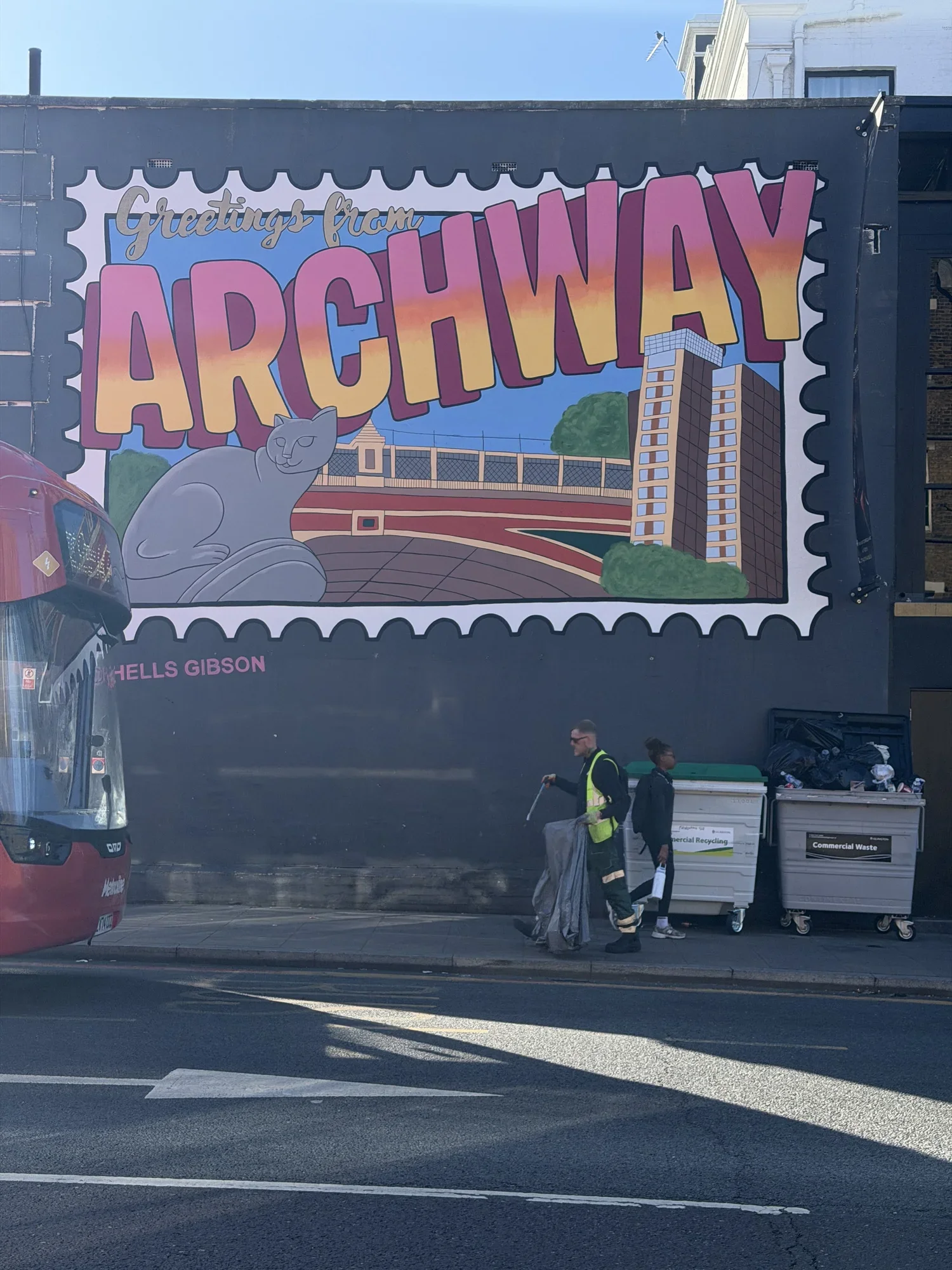
GREETINGS FROM ARCHWAY
Inspired by vintage postcards, this mural is my love letter to the North London neighbourhood that shaped me.
I’ve always loved those old “Greetings from...” postcards. They were more than just souvenirs, they were a way of telling someone, “I’m thinking of you. I wish you could see this place.”
A postcard captures a moment, a memory, and a sense of place, turning somewhere ordinary into somewhere worth sharing.
A little-known fact about me is that I send postcards everywhere I go. It’s one of my favourite travel rituals. In a world of instant messages, there’s something special about taking the time to choose a postcard, write a note by hand, and send a little piece of a place to someone you love.
That idea became the inspiration for this mural.
Archway isn’t usually thought of as a postcard destination. It’s not on most tourists’ London itineraries. But for the people who live here, it’s special. It’s full of history, characters, landmarks, and stories. I wanted to celebrate that by giving Archway the postcard it deserves; a giant “Greetings from...” that reminds us every place has something worth sharing.We consolidated disparate clinical systems into a secure, interoperable platform that streamlines patient journeys and accelerates evidence-based decision making.
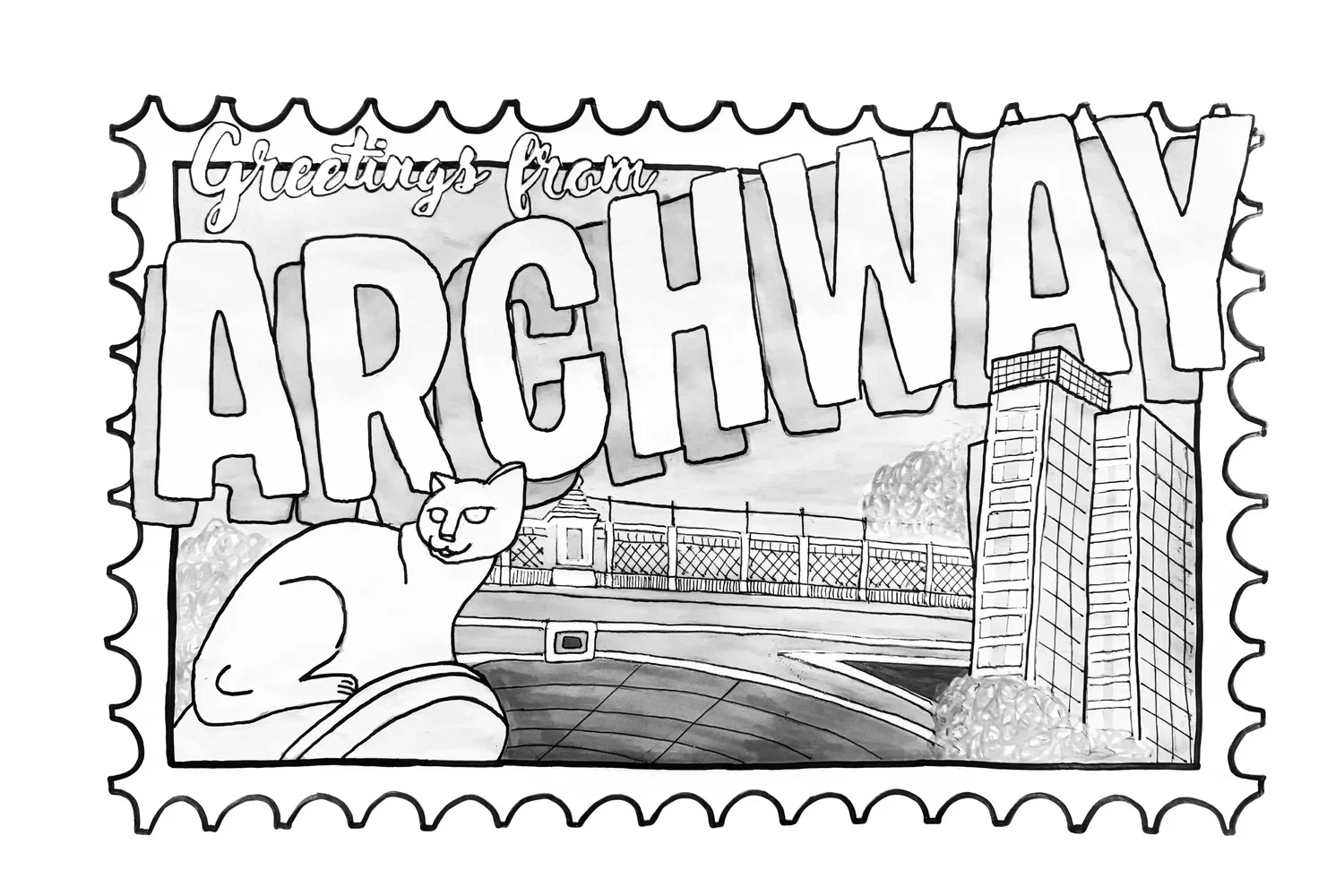
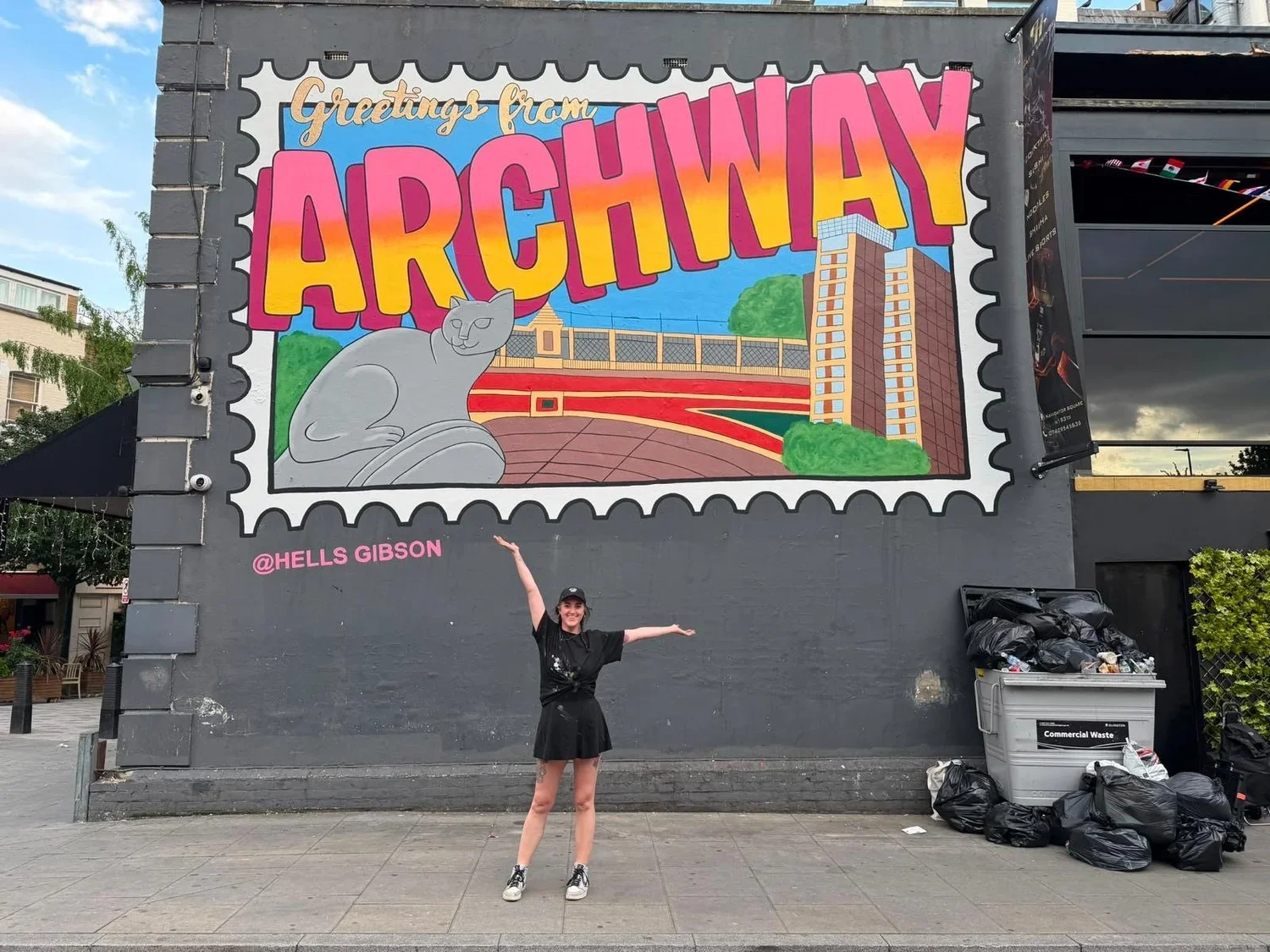
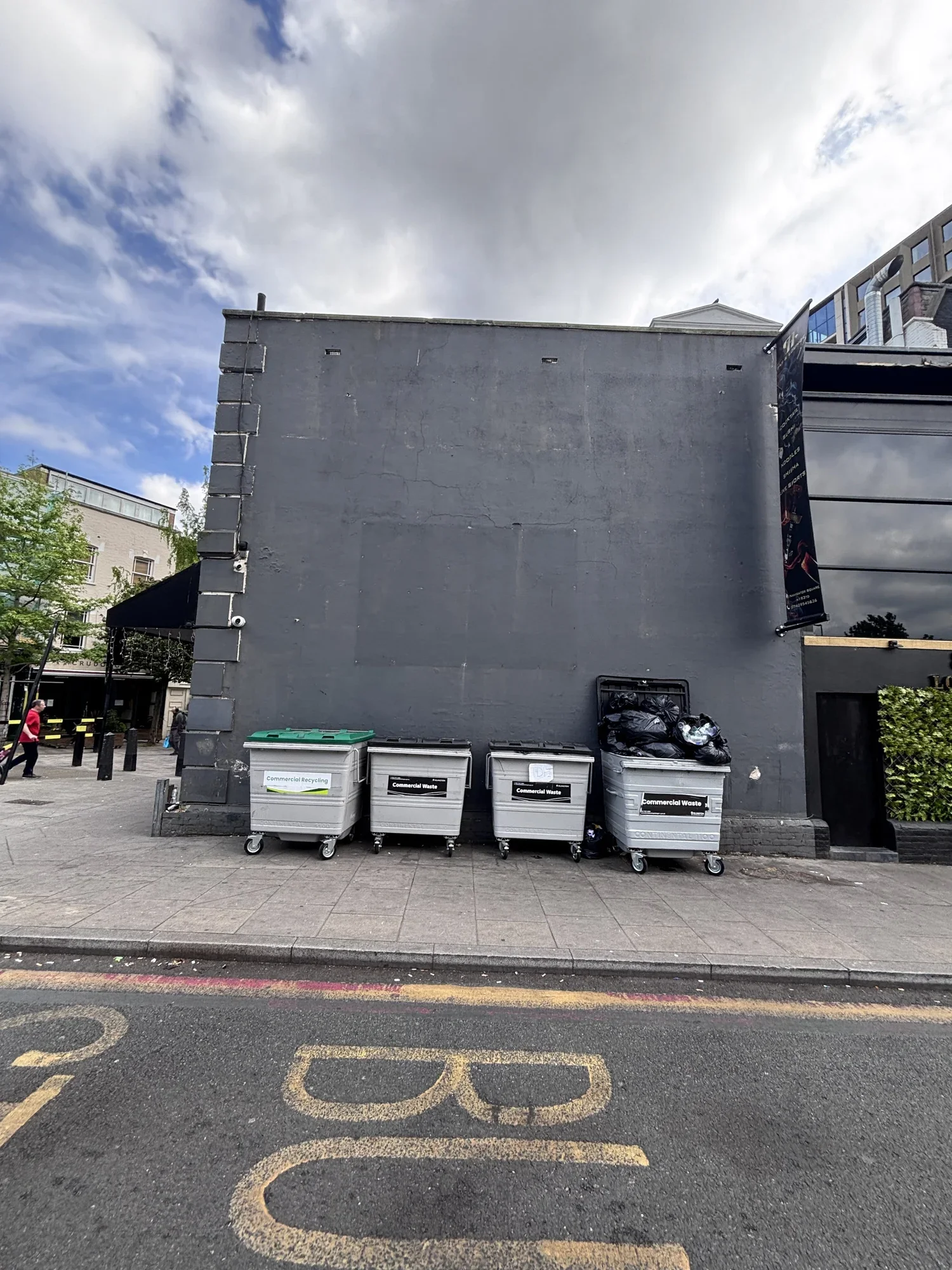
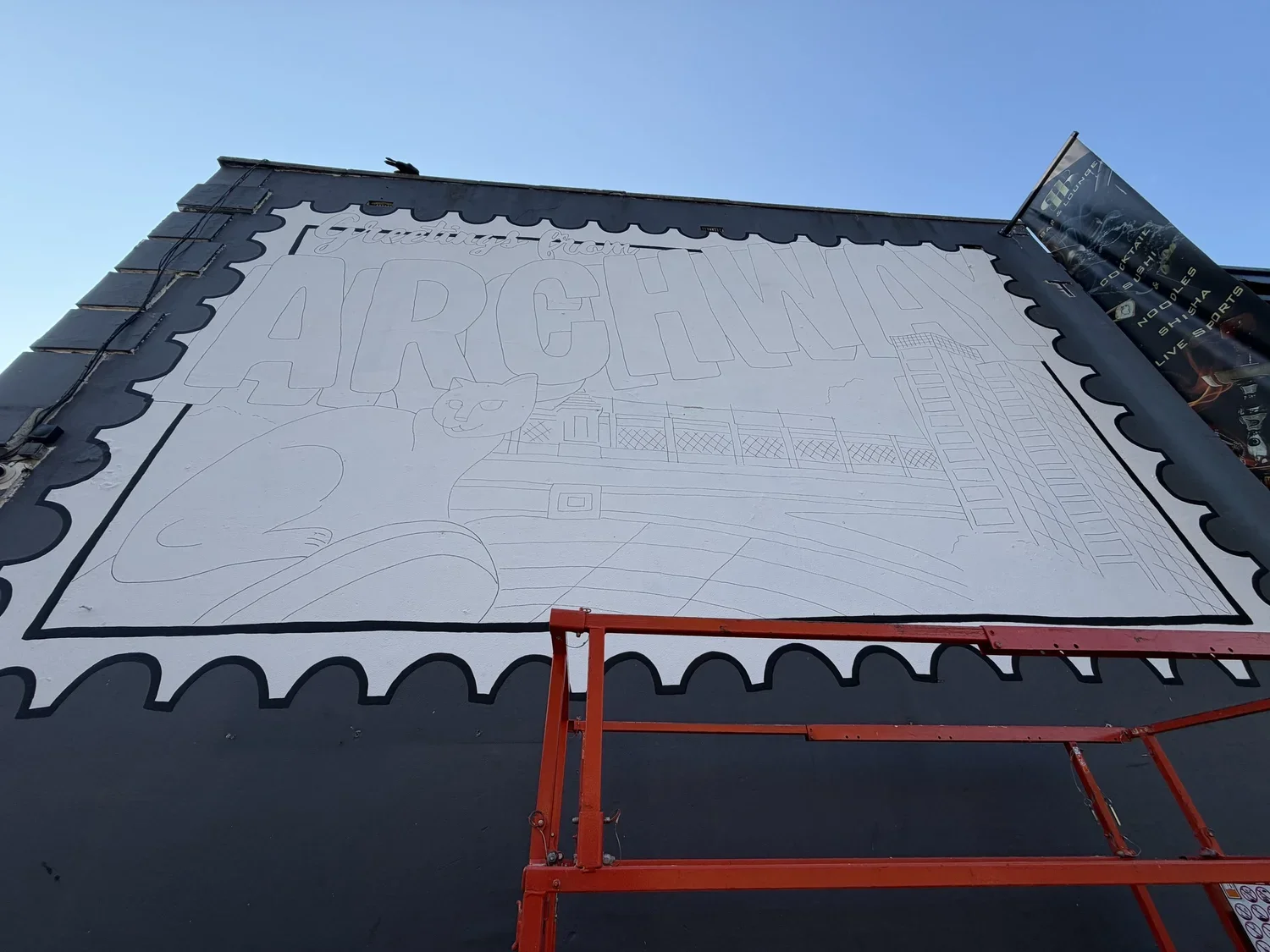
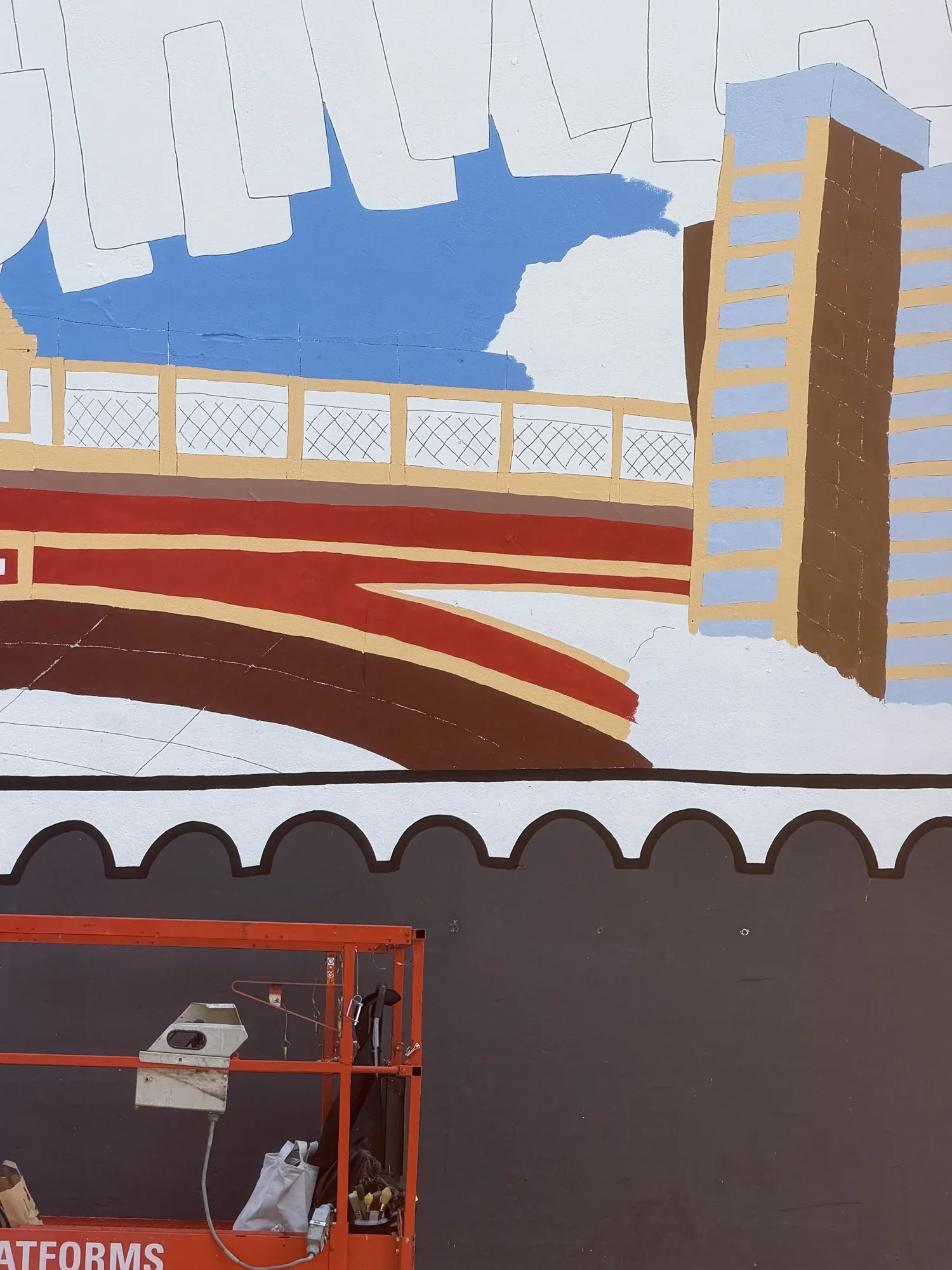
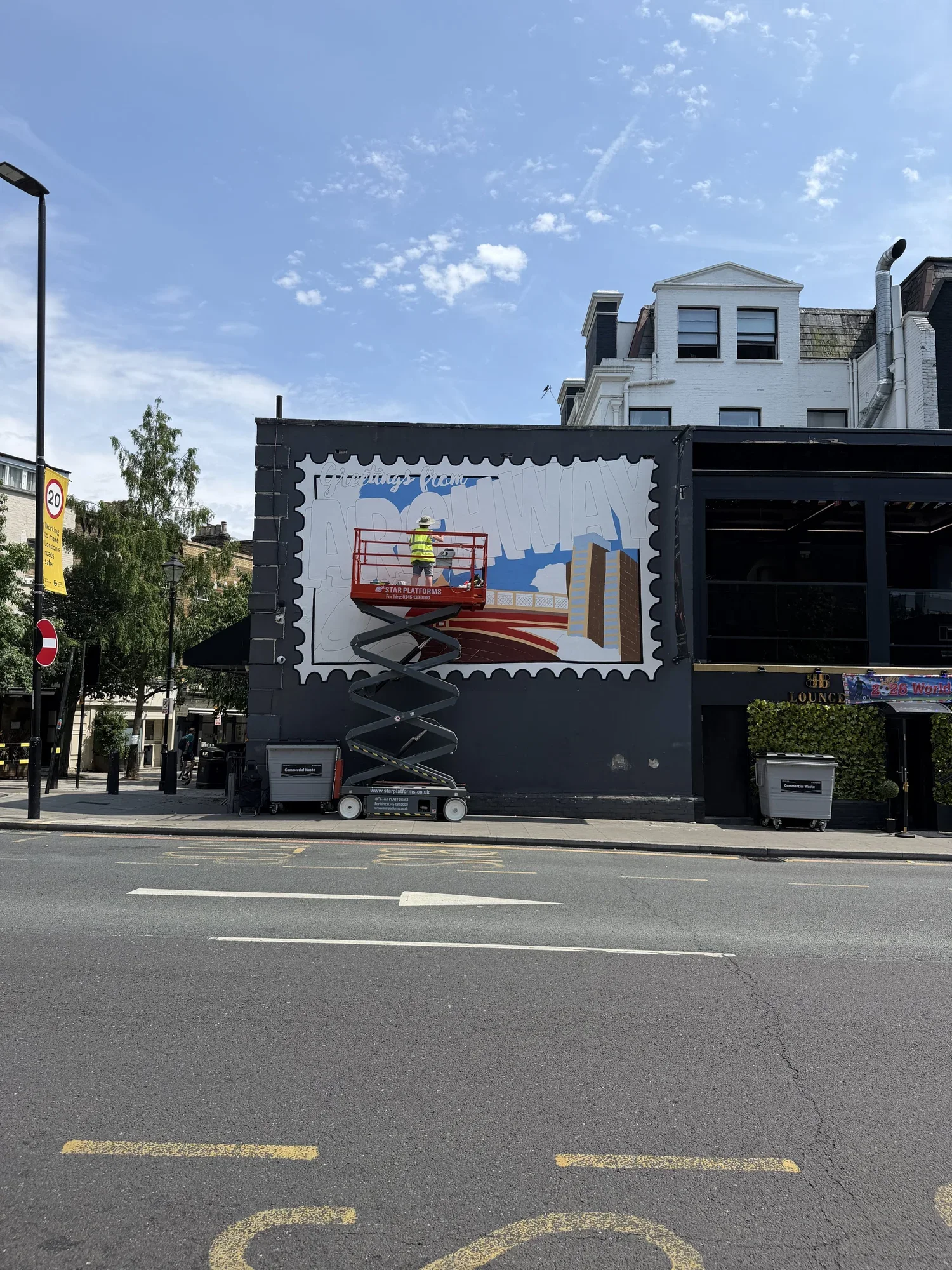
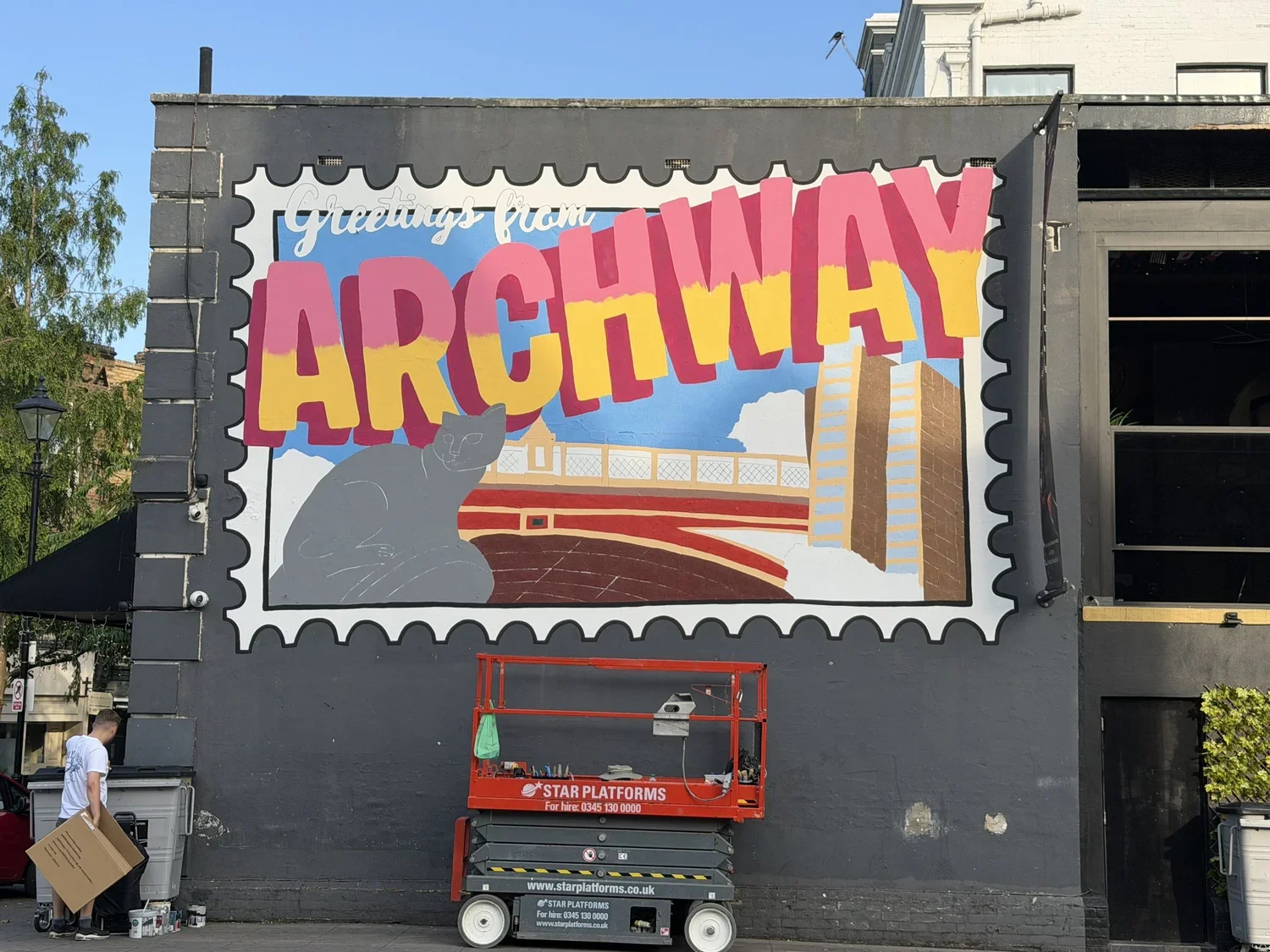
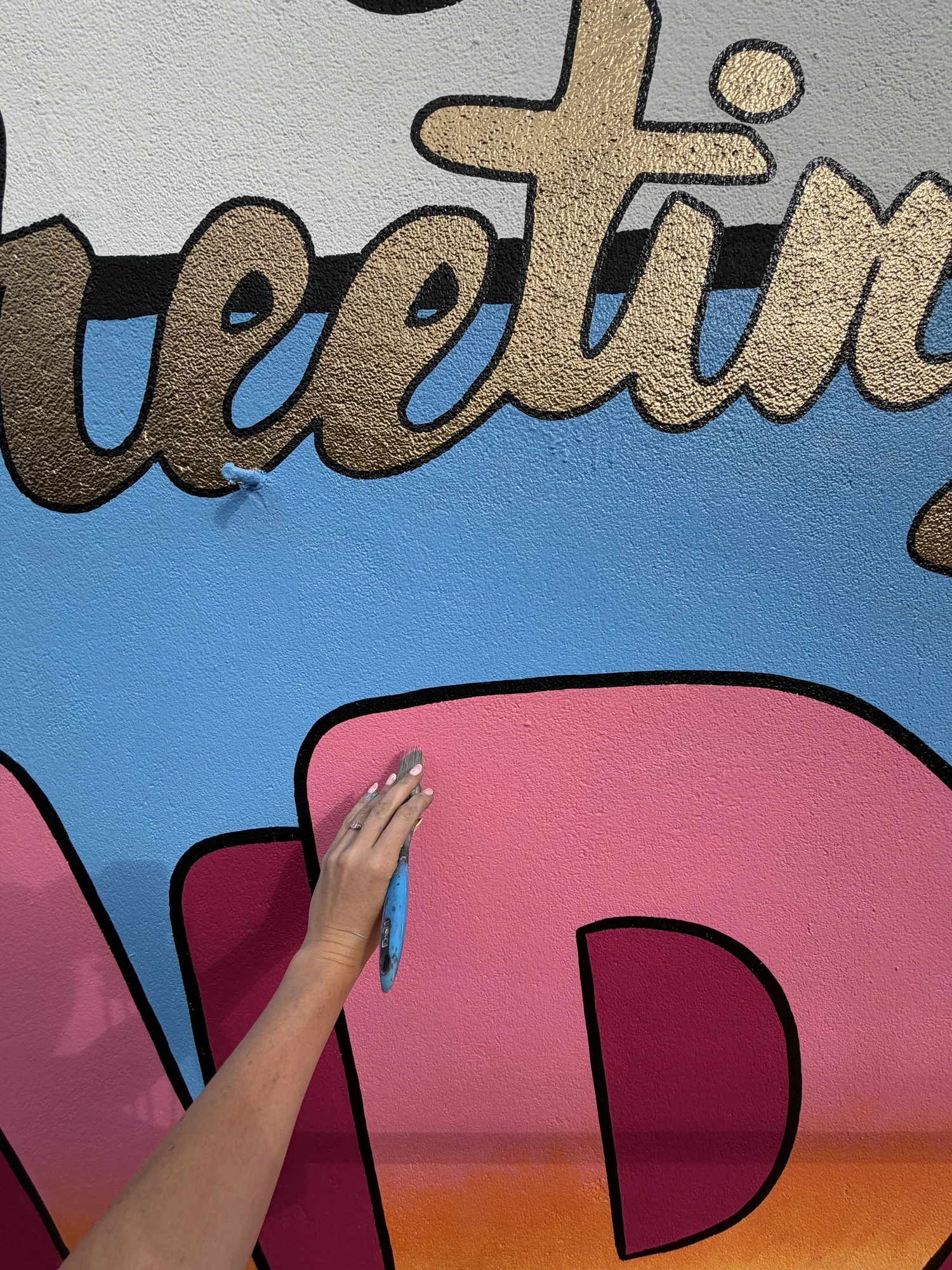
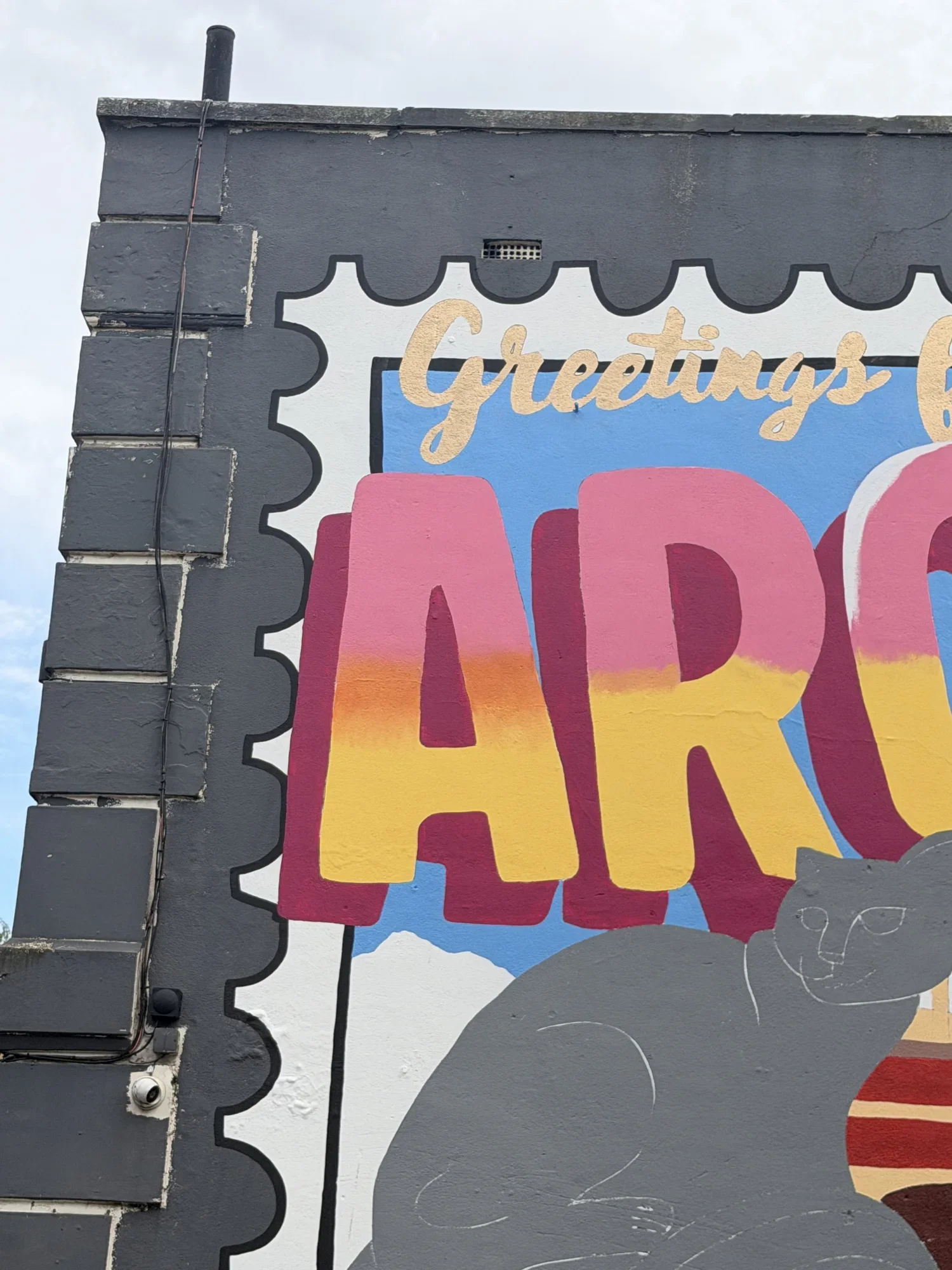
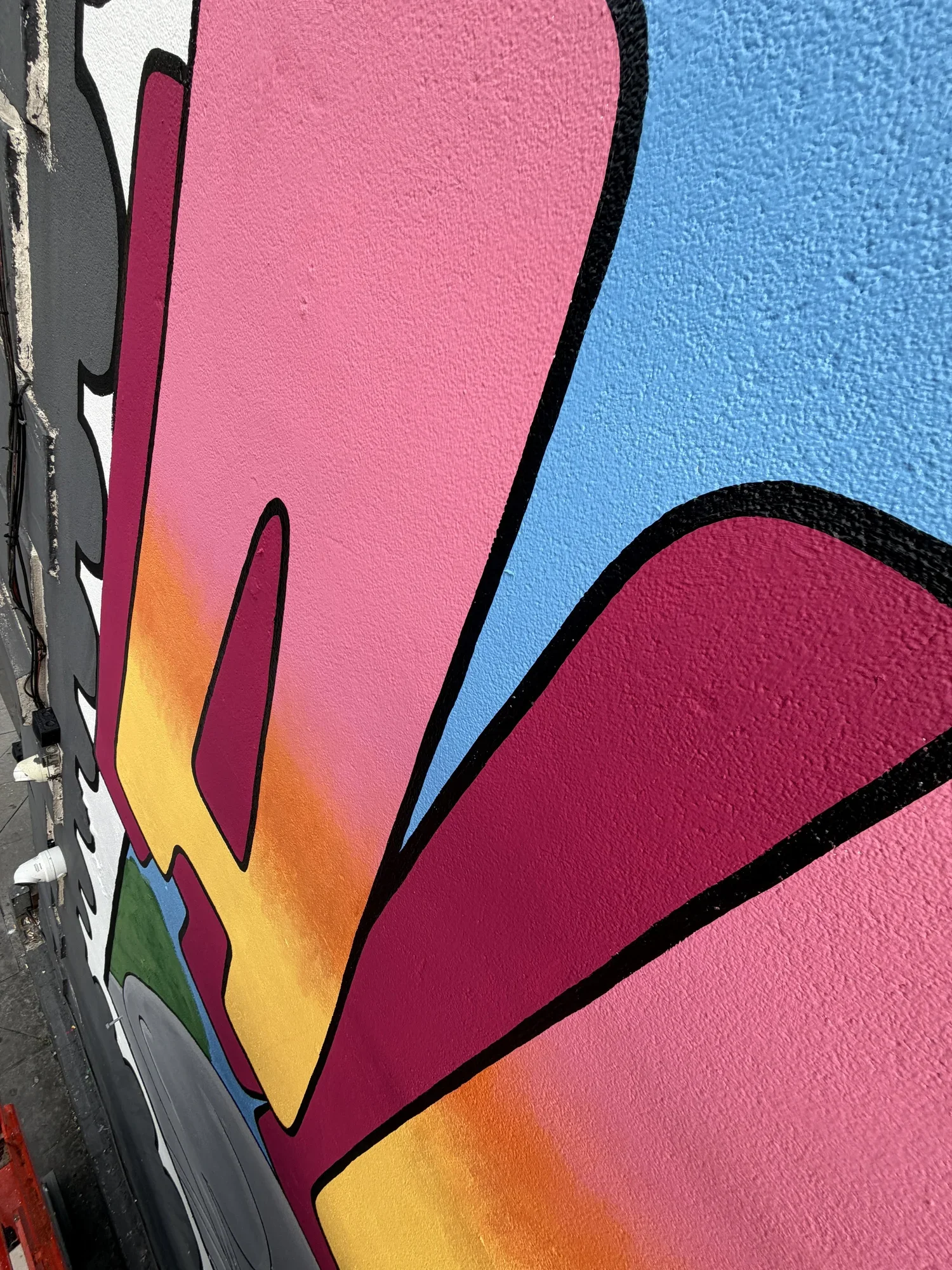
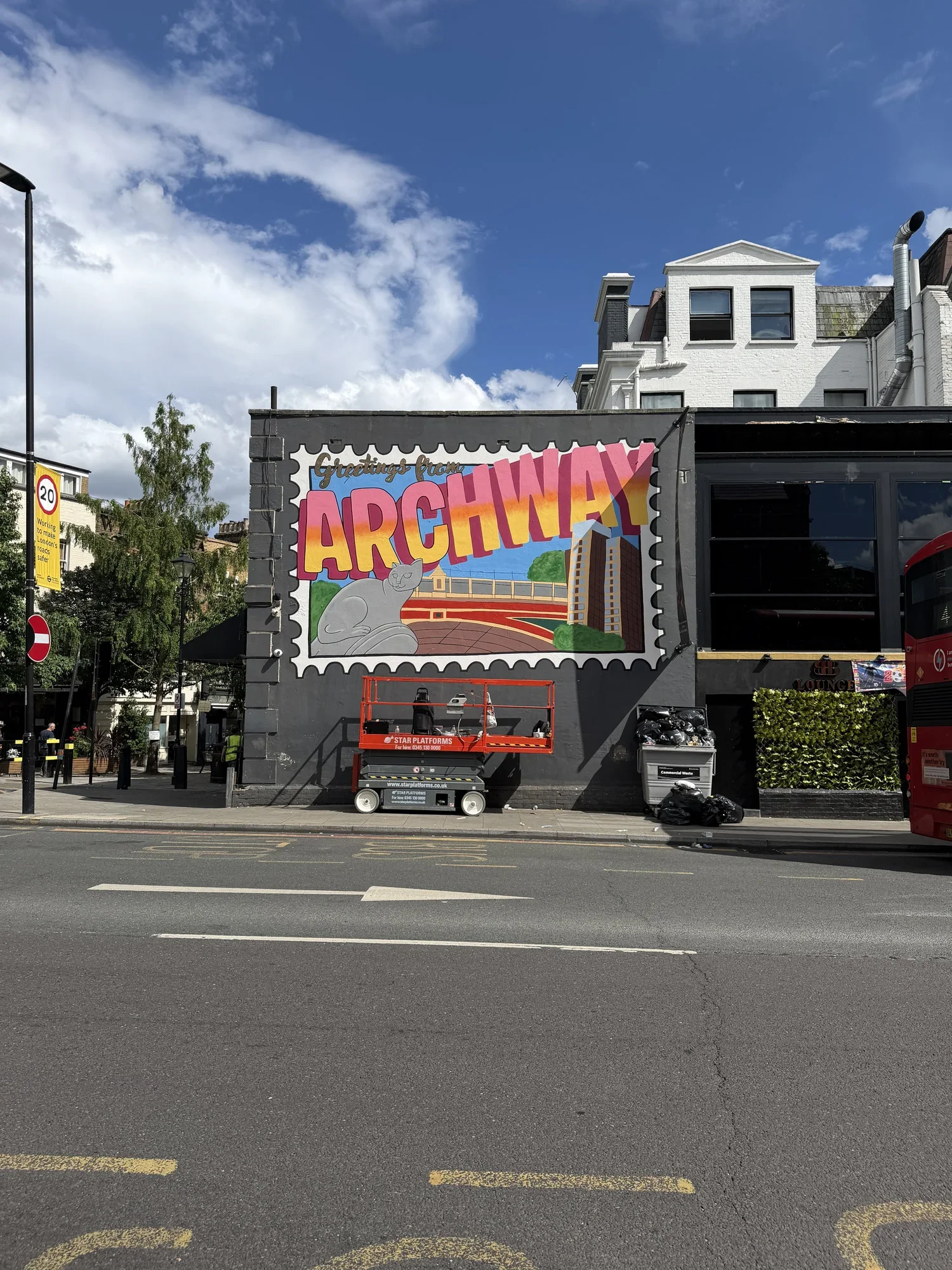
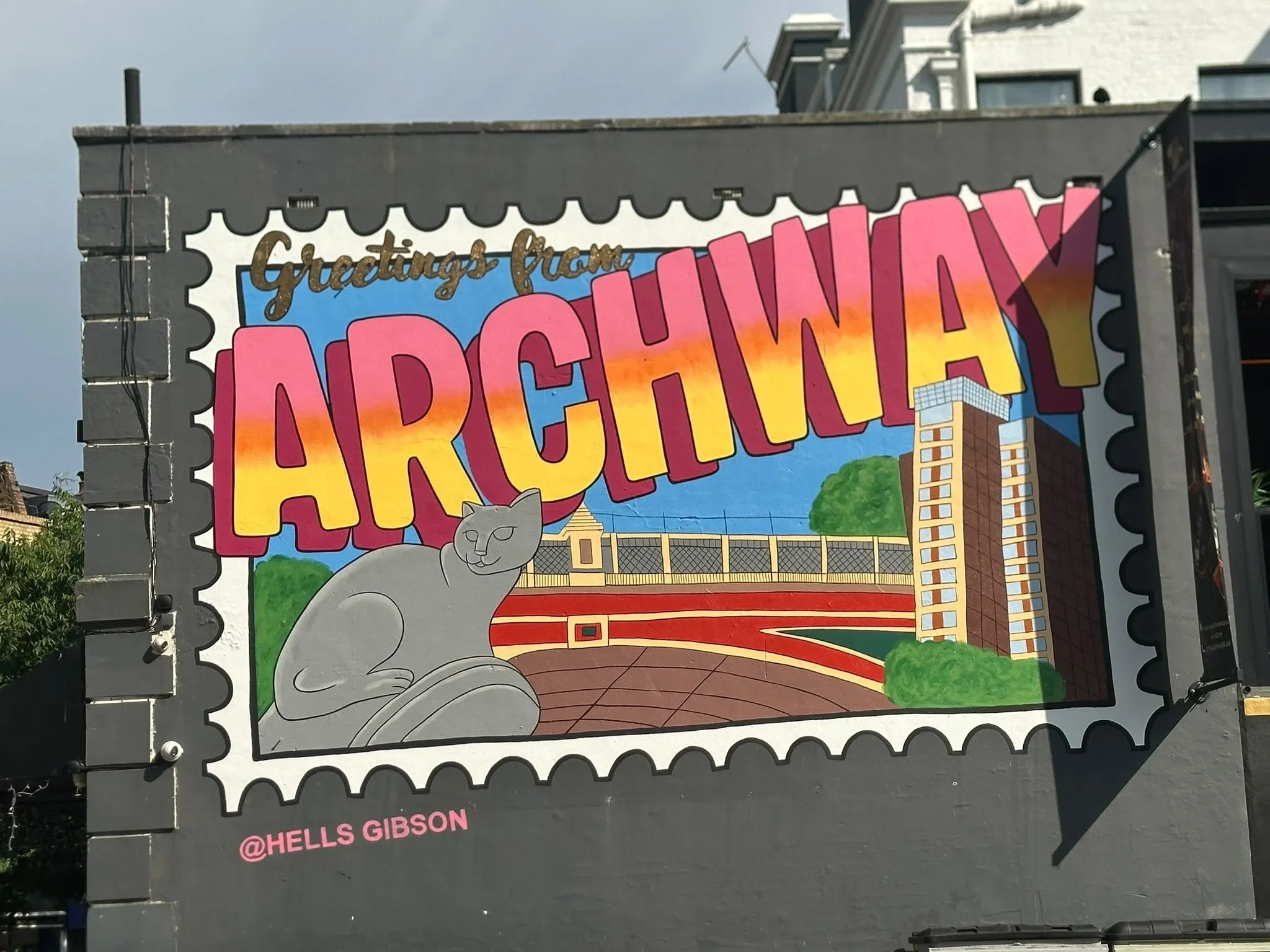

Archway-born artist Hells Gibson has added another public artwork to the neighbourhood she grew up in. Painted in the style of a giant vintage postcard, "Greetings from Archway" celebrates local identity through bold lettering and familiar landmarks, continuing her commitment to community-focused public art.
This mural feels like a love letter to Archway. What inspired the idea?
Archway is where I grew up, so I wanted to create something that celebrates the area. The postcard format is universally recognisable, it immediately says, "This place matters." I wanted people walking past to feel a sense of pride in Archway.
Why the vintage postcard aesthetic?
There's something optimistic about those old travel postcards. They turn everyday places into destinations. Archway isn't usually marketed as a tourist attraction, but for the people who live here it's full of memories, character and history. I liked the idea of giving it that same treatment.
The typography is impossible to miss.
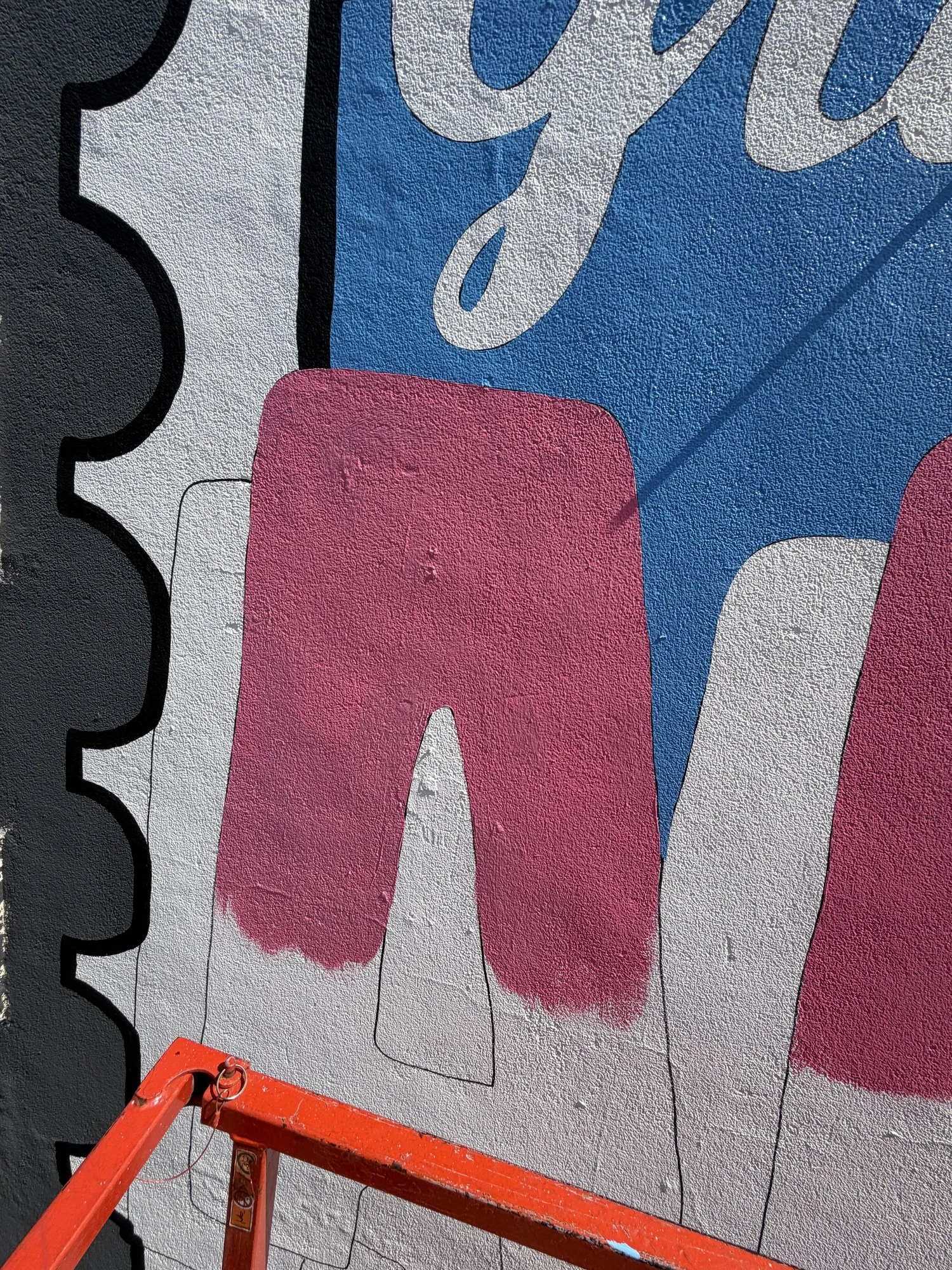
Letters are really at the heart of my practice. I've always loved how typography can communicate emotion as much as words themselves. Making "ARCHWAY" the dominant element means the neighbourhood becomes the artwork and using bright colours like pink and yellow make the piece eye-catching amongst the grey of the surrounding buildings.
How did you decide which local references what to include?
I wanted to balance recognisable landmarks with things that people who know Archway would instantly understand. Archway has a long association with Dick Whittington and his cat, so it felt like an important symbol to include. The stone cat statue on is not far from the mural and is famous in the area, everyone knows you must rub the cat’s head when you pass for good luck! It's one of those pieces of local folklore that immediately anchors the mural in its surroundings.
Community seems central to your work.
Definitely. Public art is different because it belongs to everyone. You can't choose your audience, they encounter it on the school run, on their commute, or walking home. I love creating work that becomes part of people's everyday lives.
You've described yourself as both a community artist and a street artist. How do those two identities intersect?
For me they're inseparable. Street art isn't just about painting walls; it's about engaging with the places and communities around them. My favourite projects involve listening first and then creating something that reflects where it's going to live.
What do you hope people take away from this mural?
I hope it makes people smile.
Finally, what role do you think public art plays in London today?
Public art can change how we experience a place. It can create landmarks, spark conversations, and celebrate local identity. London is full of incredible communities, and murals are one way of making those stories visible.